AI Dungeon: AI Game That Lets You Create Stories
AI Dungeon is one of those experiences that feels different the moment you try it. You’re not following a story, you’re shaping it. You type what you want to do, and the AI builds the next part around your choices.
It can feel like an AI game, a AI writing tool, or even a roleplay engine depending on how you use it. Sometimes it creates surprisingly immersive moments, and other times it goes off track – that unpredictability is part of the experience.
In this guide, you’ll get a clear look at how it works, what actually makes it engaging, and how to get better results from it. You’ll also find useful AI Dungeon prompts, practical tips, and a breakdown of whether it’s worth using today.
I also explore the 10 best AI Dungeon alternatives and their distinctive features. So, bear with me till the end.
Features That Set AI Dungeon Apart
AI Dungeon isn’t just a text-based game, it’s a system where different AI models, memory tools, and player input combine to create unpredictable stories. The difference shows up in how much control you have, how the AI responds, and where it still falls short.
Let’s explore the features of AI Dungeon, how they work and impact:
1- Adaptive and Dynamic Storytelling
AI Dungeon doesn’t follow a script. It generates the story one step at a time based on what you do.
How it Works
Each time you enter an action (e.g., “I draw my sword and confront the king”), the AI predicts what should happen next using recent context and stored memory. Higher-tier models handle longer context windows, which means they can track more of the story at once.
Impact
Short stories feel surprisingly coherent, but in longer sessions, the AI may forget earlier events, change character behavior, introduce contradictions.
Knowing this helps you steer the story instead of expecting perfect continuity.
2- Interactive, Player-Driven Gameplay
There are no buttons like “Attack” or “Defend.” You define everything.
How it Works
You can type anything:
Actions → “I sneak through the window”
Dialogue → “I tell him the truth”
Instructions → “Make the tone darker and more serious”
The AI interprets all of this and continues the story.
Impact
You’re not limited by game mechanics. If something makes sense in the story, you can try it. This is why players often use AI Dungeon for roleplay, experimenting with story ideas, and creating unpredictable scenarios.
3- Open-Ended Creativity (But Not Truly Unlimited)
You can create almost any scenario, but the AI still has boundaries.
How it Works
You can start from a blank prompt, modify existing scenarios, build custom worlds with defined rules. The AI tries to follow your setup while improvising details.
Impact
Freedom is high, but not absolute. The AI can drift off-topic, misinterpret vague inputs, struggle with complex logic. The more clearly you guide it, the better the results.
4- Multiple Genres and Custom Worlds
Switching from fantasy to sci-fi isn’t just cosmetic, it changes how the AI responds.
How it Works
You can define setting (e.g., cyberpunk city, medieval kingdom) characters, roles, and world rules (magic systems, technology limits). Community scenarios also provide pre-built worlds.
Impact
Well-defined worlds produce better stories. Vague setups lead to generic outputs. The quality of your input directly affects the quality of the narrative.
5- Multi-Model AI System (What Actually Changes the Experience)
Not all AI Dungeon responses are equal, the model you use matters a lot.
How it Works
There are different model tiers:
Basic/free models → faster, but more random and less consistent
Mid-tier models → better structure and storytelling flow
High-end models → stronger memory handling, more detailed writing
Switching models can completely change how the same prompt plays out.
Impact
This is the biggest quality lever in AI Dungeon. If a story feels repetitive or incoherent, the model is often the reason – not your prompt.
6- Memory System and Context Control
AI Dungeon gives you tools to “remind” the AI what matters.
How it Works
You can store key details like character traits, relationships, world rules. This information is reused during story generation.
Impact
Memory improves consistency, but it’s not perfect – the AI may ignore saved details, too much memory can dilute important information. The best results come from keeping memory concise and relevant.
7- Image Generation for Scenes and Characters
You can turn parts of your story into visuals.
How it Works
By prompting the system, you can generate images of characters, locations, key story moments. However, this usually consumes credits or requires higher-tier access.
Impact
It adds a visual layer to storytelling, but it’s more of a bonus than a core feature. The quality can vary depending on the prompt and model used.
8- Multiplayer and Shared Storytelling
Stories don’t have to be solo anymore.
How it Works
Multiple players can join the same session and contribute actions, dialogue, and decisions.
Impact
This creates unpredictable narratives, especially when players take the story in completely different directions. It works well for:
– Roleplaying groups
– Collaborative storytelling
– Experimenting with chaotic scenarios
9- Community-Created Scenarios
A large part of AI Dungeon’s content comes from its users.
How it Works
Players publish custom adventures, pre-built worlds, story templates. You can play them directly or modify them.
Impact
This saves time and exposes you to better-crafted setups than random prompts. High-quality scenarios often produce noticeably better stories.
10- Credits and Usage System (What Limits the Experience)
The AI Dungeon platform runs on a usage-based system for advanced features.
How it Works
Credits are used for more powerful AI models, longer context generations, image creation. Free access is limited to basic functionality.
Impact
You can use AI Dungeon casually for free, but high-quality storytelling depends on credits, and longer, more detailed outputs cost more. This directly affects how far you can push a story.
AI Filmmaking is a new reality – explore the AI Tools for Film-making.
AI Dungeon Is Changing the Way We Tell Stories
AI Dungeon turns storytelling into something you actively shape rather than simply follow. Instead of moving through a fixed plot, you define the direction through your actions, decisions, and inputs – while the AI generates what happens next in real time.
The result feels less like playing a game and more like co-creating a story where outcomes aren’t prewritten. This shift changes how narratives unfold: scenes react to you, characters adapt (sometimes unpredictably), and the story can move in directions no traditional game would allow.
What makes AI Dungeon stand out is the level of control paired with flexibility. You’re not choosing from options – you’re writing them. Whether you want a tightly controlled narrative or something chaotic and experimental, the experience adjusts to how you interact with it. That freedom comes with trade-offs like occasional inconsistencies, but it also opens the door to stories that feel personal, dynamic, and different every time. Once you understand how to guide it effectively, it becomes a tool for building stories rather than just consuming them.
How to Write Better Stories with AI Dungeon (Step-by-Step Guide)
Strong results in AI Dungeon come from how you guide the AI, not how long your prompts are. Clear intent, structured input, and small corrections make a noticeable difference in story quality.
Better results come from:
– Clear roles and situations
– Specific actions instead of vague inputs
– Consistent direction
– Selective use of memory
– Quick corrections when needed
When these elements are in place, the AI produces more coherent, engaging, and controllable stories.
1. Start with a Prompt That Has Direction
A good prompt gives the AI something to build on immediately – role, situation, and tension.
Use this structure:
Who you are
Where you are
What’s going wrong
Example Prompt:
“You are a disgraced royal guard hiding in a war-torn kingdom. The king you once protected has been assassinated, and you’ve just been accused of the crime. Soldiers are closing in.”
Why this Works
The story begins with conflict, which helps the AI generate more focused and engaging responses.
2. Define Key Details Early
Important details should be established before the story grows. Include personality traits, relationships, and tone of the story.
Example:
“I stay calm under pressure and avoid unnecessary violence. I don’t trust authority figures.”
Why this Matters
The AI uses this as a reference point, which helps keep character behavior more consistent.
3. Write Clear, Intentional Actions
The AI responds best when your inputs describe exactly what your character does.
Example:
“I quietly move behind the guard, waiting for the right moment to slip past unnoticed.”
Why this Works
Specific actions push the story forward and reduce random or irrelevant responses.
4. Guide the Scene When Needed
You can subtly shape how the AI responds without breaking immersion.
Example:
“I open the door slowly. Inside, reveal something unusual but not immediately dangerous.”
Why this Works
It keeps the story aligned with your expectations while still letting the AI generate details.
5. Keep Inputs Focused
Each input should do one thing clearly.
Example:
“I search the desk for documents related to the case.”
Why this Works
Short, focused inputs are easier for the AI to process, which improves response quality.
6. Use Memory for Core Story Elements
Store only the details that must stay consistent. Do good use of memory for character motivations, key relationships, and world rules.
Example memory entry:
“The city is under constant surveillance, and leaving it without clearance is impossible.”
Why this Matters
It reinforces important rules without overwhelming the AI with unnecessary information.
7. Fix Errors Immediately
If something doesn’t make sense, correct it right away.
Example:
“That’s incorrect. The door is locked. I try to pick the lock instead.”
Why this Works
Early corrections prevent the story from drifting in the wrong direction.
8. Explore Different Styles and Tones
The same idea can feel completely different depending on how you present it.
Example:
“I walk into the abandoned church, expecting silence, but something inside is moving.”
Why this Works
Tone influences how the AI builds the scene, whether it becomes suspenseful, dramatic, or fast-paced.
9. Redirect the Story When It Drifts
If the narrative starts going off track, bring it back to the main objective.
Example:
“I ignore the distraction and focus on escaping the building before anyone notices me.”
Why this Works
It keeps the story moving toward a clear goal instead of branching into unrelated events.
10. Keep the Story Moving with Decisions and Consequences
Progress comes from action and reaction.
Example:
“I take the risk and reveal my identity, knowing it could either earn trust or get me arrested.”
Why this Works
Decisions create momentum, and momentum keeps the story engaging.
Discover also ChatGPT prompts for USA Independence Day for various fun activities.
AI Dungeon Prompts
AI Dungeon responds best to prompts that include a clear role, a situation, and immediate tension. The more specific your setup, the less generic the story feels. Instead of just describing a scene, give the AI something to act on right away.
Here are prompts designed to produce stronger, more engaging results:
Fantasy Adventure
Prompt:
“You are a former royal archivist who was exiled after discovering a forbidden truth. In a crowded medieval marketplace, you spot an artifact you thought was destroyed – a glowing relic tied to an ancient prophecy. Moments after you recognize it, a cloaked figure begins following you through the crowd. You know they’re not the only one searching for it. What do you do?”
Why this Works
– Clear role (exiled archivist)
– Immediate conflict (being followed)
– Built-in mystery (artifact + prophecy)
Sci-Fi Exploration
Prompt:
“You are the captain of a deep-space vessel assigned to investigate a silent research station orbiting a dying star. As you dock, your systems detect faint life signs but no communication signals. The station logs show the crew vanished three days ago. When the airlock opens, something inside shifts in the darkness. What is your first move?”
Why this Works
– Strong objective (investigation)
– Suspense (missing crew)
– Immediate decision point
Mystery Thriller
Prompt:
“You are a detective investigating a series of murders where each victim is found holding an identical photograph. The latest crime scene matches the pattern – but this time, the person in the photograph is you. Your phone rings before you can react. The caller says, ‘You’re already too late.’ What do you do next?”
Why this Works
– Personal stakes (you’re involved)
– Pattern-based mystery and instant tension
Use ChatGPT Free to try and get customized prompts for your specific story.
Historical Drama
Prompt:
“You are a trusted advisor in a royal court where the king has fallen gravely ill. Three factions are quietly preparing for a power shift, and each believes you are on their side. Tonight, you’ve been summoned in secret by all three – each offering protection in exchange for loyalty. If you choose wrong, you won’t survive the week. Who do you meet first?”
Why this Works
– Political tension
– Multiple choices with consequences
– Clear stakes
Dark Survival
Prompt:
“You wake up in a forest with no memory of how you got there. Your hands are stained with blood that isn’t yours. In the distance, horns echo through the trees – someone is hunting, and you’re the target. As you search your pockets, you find a map with one location marked: ‘Safe if you’re early.’ What do you do?”
Why this Works
– Immediate danger
– Mystery (lost memory)
– Clear objective (reach safety)
Cyberpunk / Futuristic
Prompt:
“You’re a freelance hacker in a surveillance-heavy city where every citizen is tracked. One night, your system flags an anomaly, someone has erased you from all official records. No ID, no history, no existence. Minutes later, drones begin scanning your building. If they confirm your presence, you won’t just be arrested; you’ll disappear permanently. What’s your next move?”
Why this Works
– High stakes
– Clear threat and strong setting
See Also: ChatGPT prompts for writing a poem
How to Get Better Results from These AI Dungeon Prompts
To make these prompts work even better:
Add a Quick Follow-Up Action Immediately
Don’t wait for the AI to decide everything, so better to add a follow-up action quickly.
For example: “I hide in the crowd and observe the cloaked figure before making a move.”
Define Your Character Early
Always set your specific character because personality affects how the AI responds.
For instance: “I avoid violence unless absolutely necessary.”
Keep the Pressure On
Better to introduce time limits, danger, or uncertainty, this keeps the story from becoming slow or repetitive.
Note: these AI Dungeon prompts are starting points, not fixed scripts. Adjust roles, stakes, or settings to match the kind of story you want, and guide the AI as the story unfolds.
Tips to Elevate Your Storytelling with AI Dungeon
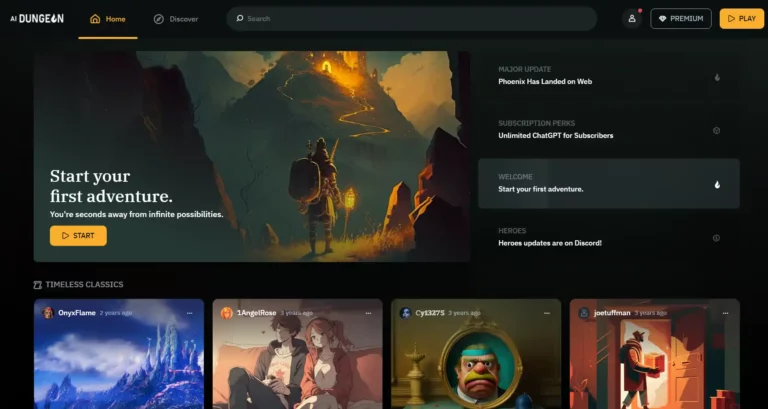
Good storytelling in AI Dungeon isn’t about writing more, it’s about guiding the AI with intention. Small adjustments in how you write, respond, and steer the narrative can turn an average story into something immersive and consistent.
Control the Narrative Style (Don’t Let It Drift)
The AI doesn’t lock into a style unless you do. Pick a style early: first-person, third-person, or dialogue-heavy, reinforce it in your inputs. Without this, the story may randomly switch perspective or tone.
Example: “I narrate everything in first-person, focusing on my thoughts and reactions.”
Add Emotion with Purpose (Not Just Description)
Emotion works best when it influences decisions, not just narration because AI builds better scenes when emotions affect actions.
Weak approach:
“I feel scared.”
Stronger approach:
“I hesitate before opening the door, knowing something inside could be waiting for me.”
Be Specific with Descriptions (But Only Where It Matters)
Too much description slows the story. Target the important moments. Focused detail signals importance and shapes how the AI develops the scene.
For example: “The room smells of burnt metal, and the walls are covered in fresh scratch marks.”
Use Dialogue to Drive the Story
Dialogue isn’t just for conversation – it’s a tool for control. It reveals information, creates tension, and pushes the story forward.
Example: “I ask, ‘Who sent you here, and why are you watching me?'”
The AI Dungeon often responds with new plot details during dialogue.
Stay Consistent with Character Behavior
The AI Dungeon game follows patterns. If your character acts randomly, the story becomes unstable. Better to stick to defined traits, and make decisions that match your role. For example, if your character avoids violence, don’t suddenly attack without reason because consistency improves realism and keeps the narrative believable.
Introduce Conflict Early and Keep It Active
Stories lose momentum when nothing is at stake. The AI Dungeon performs better when there’s ongoing tension to react to. So, make sure to add time pressure, risk, and uncertainty.
For instance: “I hear footsteps approaching fast. I only have seconds to hide.”
Guide the AI When It Starts Wandering
The story won’t stay on track by itself, you have to steer it. For instance, “I ignore the side conversation and focus on finding the hidden passage.” It cuts off irrelevant branches and keeps the narrative focused.
Use Constraints to Improve Creativity
Giving the AI limits often produces better results than total freedom. Constraints force the AI to generate more creative and logical outcomes.
Example: “The solution should not involve violence.”
Build Scenes, Not Just Actions
It wrks best if you think in terms of scenes instead of isolated moves. It gives the AI context, mood, and direction in one step.
For example, Instead of: “I enter the building.”
Use: “I enter the abandoned building, checking each corner carefully, expecting someone to be inside.”
Accept Useful Surprises, Reject Bad Ones
Not every unexpected turn is worth keeping. You should keep twists that add tension or depth, and correct ones that break logic. You stay in control of quality while still benefiting from AI creativity.
Example Correction: “That doesn’t fit the story. The character doesn’t know me yet.”
Treat It Like a Collaboration (But Stay in Charge)
The AI generates ideas, but you decide what stays. The best approach is to build on good outputs, redirect weak ones, and maintain a clear direction.
What Actually Improves Your AI Dungeon Stories
The biggest improvements come from:
– Clear direction and consistent style
– Actions driven by emotion and intent
– Ongoing conflict and stakes
– Active steering instead of passive input
Once you apply these consistently, the AI produces stories that feel more structured, engaging, and intentional.
See Also: Things to write a poem about
AI Dungeon Review: Is It Worth Playing?
AI Dungeon offers a different kind of experience – one where you create the story instead of following it. The ability to shape scenes in real time, switch genres freely, and experiment without limits makes it especially appealing for players who enjoy creativity over structure.
That said, the experience depends heavily on how you use it. Strong inputs and good guidance lead to engaging stories, while weaker direction can result in repetition or inconsistencies. It’s not a perfectly polished narrative tool, but for open-ended storytelling and roleplay, it delivers something most games still don’t.
What the Experts Are Saying about AI Dungeon
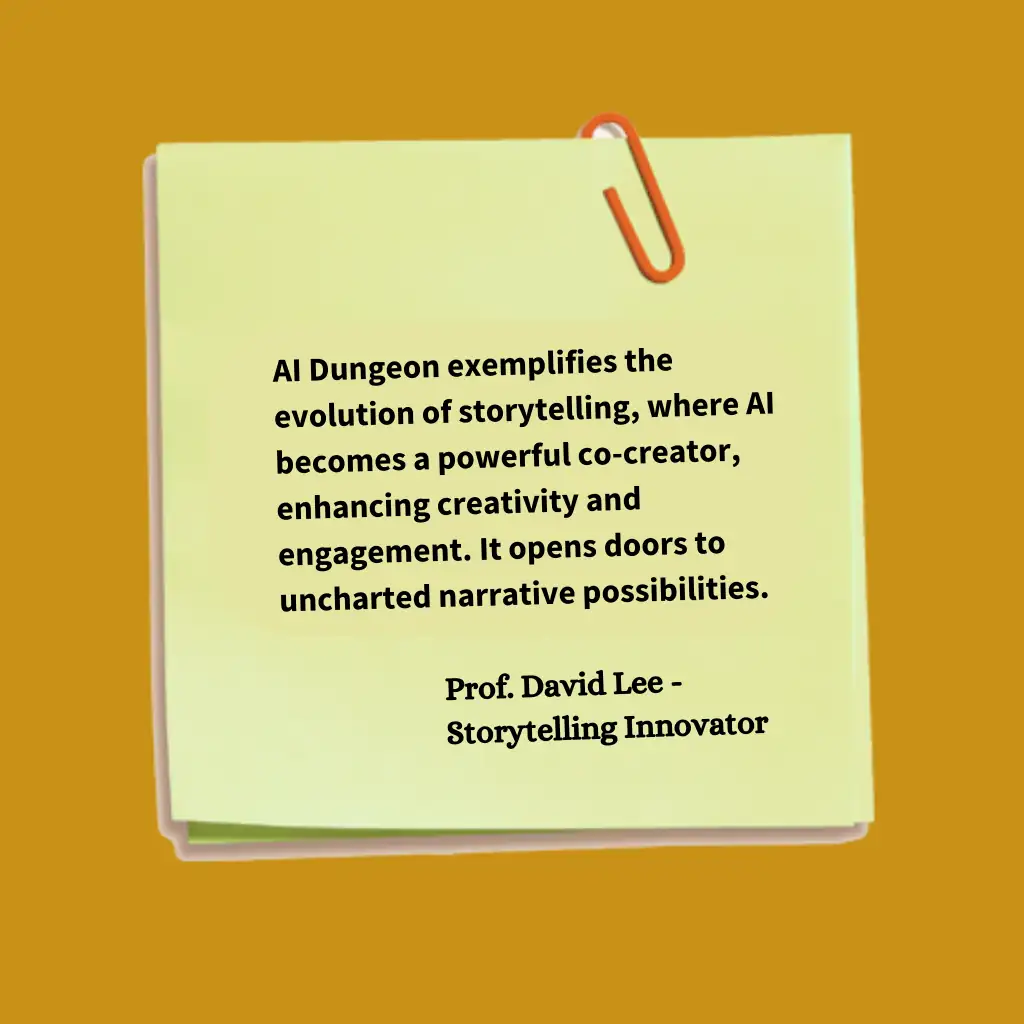
AI, gaming, and storytelling experts have recognized AI Dungeon’s potential to transform interactive narratives. Here’s a glimpse of what experts are saying about this AI game:
The Community Speaks: AI Dungeon and Its Impact
The AI Dungeon community shares their experiences and stories from their adventures in this AI game. Here’s what the community is saying:
@StoryWeaver89:
“AI Dungeon has opened a new door of creativity for me. The AI’s responses constantly surprise and inspire me to take my stories to new heights. It’s a storytelling revolution!”
@GameFanatic23:
“Being able to craft my own narratives in AI Dungeon has been a game-changer. The way the AI adapts to my prompts is incredible. The future of gaming is definitely here.”
@AdventurerAtHeart:
“AI Dungeon is more than a game; it’s an experience. The storytelling is so immersive and dynamic that I often forget I’m interacting with an AI. Highly recommend to anyone seeking a truly unique gaming adventure.”
Now, let’s explore alternative AI storyteller games for those keen to broaden their horizons beyond AI Dungeon.
Explore also the ChatGPT prompts for job interview‘s preparation.
10 AI Dungeon Alternatives: Other AI Storyteller Games
Here, I discuss the available options of AI Dungeon alternatives, exploring how they can also fuel your creativity and provide distinct experiences in gaming and storytelling.
Dreamily AI
DISTINCTIVE FEATURES
– Visual Narrative Creation:
Dreamily AI allows you to create narratives accompanied by visuals, enhancing the storytelling experience by adding an artistic dimension.
– Customizable Visual Elements:
You can customize the visuals to match the essence and mood of your stories, providing a personalized touch to the narrative.
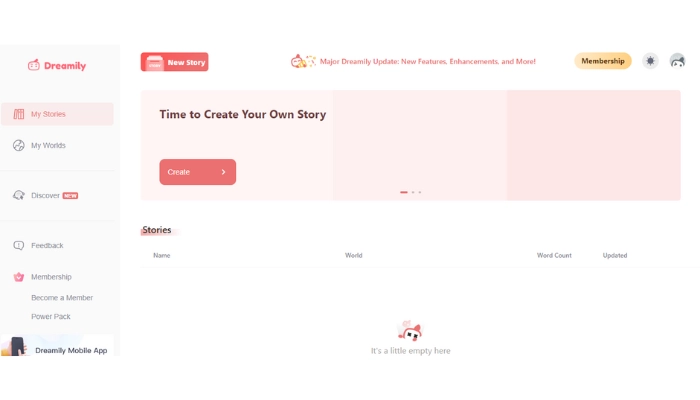
Dreamily AI is a gem in the AI Dungeon alternatives landscape. This AI-powered platform lets you effortlessly craft intricate narratives and adventures. It offers an intuitive interface that welcomes both seasoned writers and newcomers to the art of storytelling.
The platform uses advanced AI algorithms, empowering you to conjure up tales of epic proportions with the simple strokes of your keyboard. The ease of use and the depth of creativity it offers make Dreamily AI a top choice for crafting wonderful narratives.
ShortlyAI
DISTINCTIVE FEATURES
– Prompt Engineering:
ShortlyAI allows you to experiment with prompts and iterate quickly to achieve desired creative outcomes, making it a versatile tool for refining ideas.
– Prompt Suggestions and Variations:
You can receive suggestions for modifying prompts to explore different angles and perspectives for your stories.
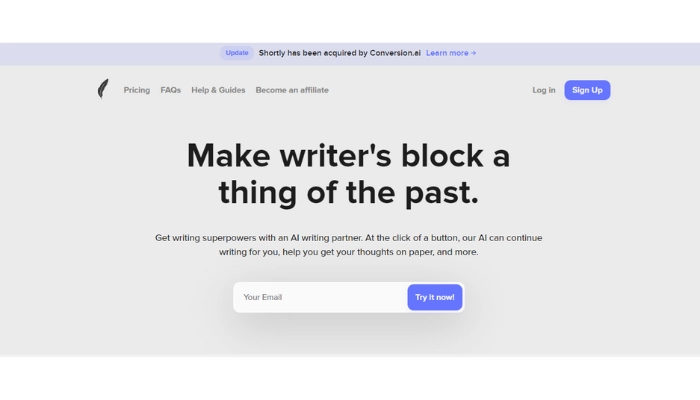
If you’re a professional storyteller seeking a trusty companion to help weave your tales, ShortlyAI is the perfect fit. It is more secure than AI Dungeon, for it doesn’t allow NSFW (not safe for work) content.
ShortlyAI specializes in creating various forms of content, including blog posts, articles, and of course captivating narratives. This AI Dungeon alternative simplifies your writing process by focusing on writer’s block rather than helping you with gaming.
GPT-Neo Dungeon
DISTINCTIVE FEATURES
– Interactive Role-playing:
GPT-Neo Dungeon facilitates interactive role-playing by allowing you to make choices and shape the story based on those decisions, mimicking a tabletop RPG (role-playing game) experience.
– Real-Time Story Evolution:
The narrative evolves dynamically based on your choices, providing an engaging and personalized role-playing adventure.
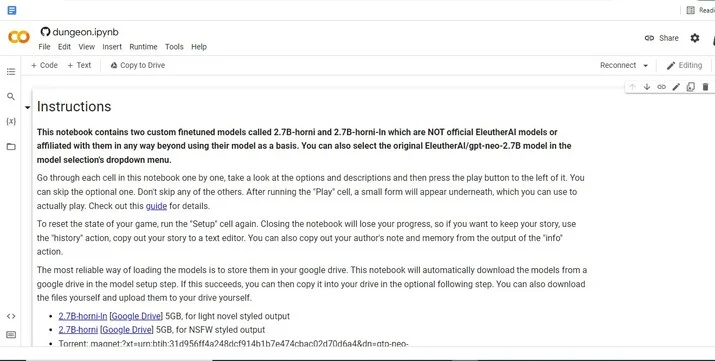
GPT-Neo Dungeon is a compelling AI Dungeon alternative offering a fusion of creativity and innovation. This platform provides a unique spin on the traditional storytelling experience, blending advanced AI technology with the magic of fascinating narratives.
It’s a platform that caters to both writers seeking inspiration and gamers craving an interactive storytelling experience using the AI model, GPT-Neo. The tool’s ability to craft intricate narratives, whether for a role-playing game or a fictional tale, makes it an enticing option for those looking to involve themselves in a world of creativity.
Whether you’re a dungeon master in need of plot twists or a novelist seeking inspiration, GPT-Neo Dungeon is ready to fuel your creativity.
WriteHolo
DISTINCTIVE FEATURES
– Character Profile Development:
Write Holo assists in creating detailed character profiles, aiding writers in shaping well-rounded and consistent characters within their stories.
– Plot Structure Suggestions:
The platform offers suggestions for structuring the plot, helping you organize your narratives effectively and maintain a cohesive storyline.

In the expansive world of AI Dungeon alternatives, Write Holo stands out as a promising platform, aiming to light the way on your creative journey of storytelling or writing an eBook.
With features like story generation assistance and character suggestions, Write Holo strives to be a reliable companion on your journey to create engaging tales. Whether you’re writing a short story or embarking on an epic saga, this AI can assist in sculpting your ideas into a coherent and engaging narrative.
NovelAI
DISTINCTIVE FEATURES
– Character Dialogue Generation:
NovelAI assists in generating natural and engaging dialogue for characters, aiding you in maintaining consistent and authentic character voices throughout the story.
– Narrative Expansion Suggestions:
The platform suggests ways to expand the narrative, encouraging writers to explore new plot points and story arcs.

In the landscape of AI Dungeon alternatives, NovelAI is a storytelling platform dedicated to crafting stories with precision and grace. This AI-powered tool is designed to assist writers and storytellers in creating compelling narratives that resonate with readers.
NovelAI is better than AI Dungeon in terms of plot structuring. This platform employs advanced AI algorithms that assist in generating well-structured and engaging stories.
You can use this AI platform for free on a trial basis. After the trial span, you’ve 3 payment options to select from. The priciest option is priced at $25 and offers extra perks in comparison to the Dungeon Legend plan (formerly Platinum plan), which is priced at $29.99.
Plot Generator
DISTINCTIVE FEATURES
– Genre and Theme Selection:
Plot Generator allows you to choose specific genres and themes, tailoring plot suggestions to match your storytelling preferences and desired mood.
– Combination of Elements:
You can experiment by combining various plot elements, creating unique and customized plot ideas for your stories.
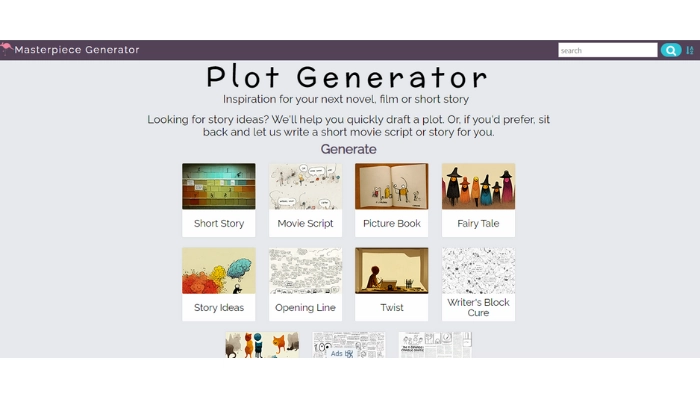
For storytellers seeking a spark of inspiration, Plot Generator stands as an exciting AI Dungeon alternative that can set your creative flames ablaze with just a click. This innovative platform is designed to generate story ideas, characters, and plots with ease.
Plot Generator thrives on simplicity and efficiency, offering an uncomplicated interface that allows you to easily access a wide array of plot ideas. It has the options of various genres and themes to suit your storytelling preferences.
It allows you to customize characters, ages, names, personalities, and genders and lets you modify plot conflict, twists, and resolution.
Magium
DISTINCTIVE FEATURES
– Choose-Your-Own-Adventure Interface:
Magium has a choose-your-own-adventure style interface, enabling you to make choices at critical junctures, affecting the storyline and character development.
– Character Relationship Dynamics:
Your choice in the game influences the relationships between the player’s character and other in-game characters, adding depth and complexity to the narrative.
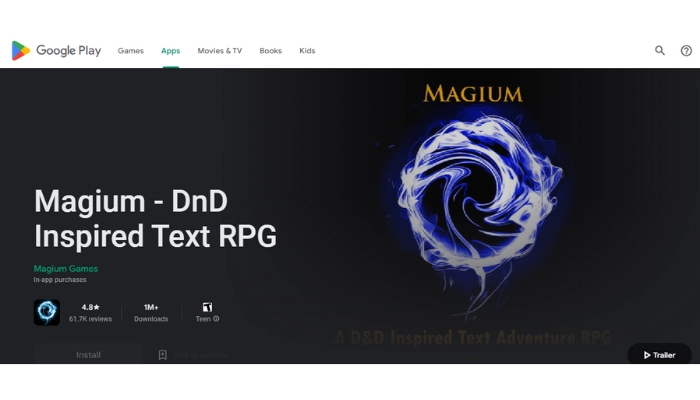
AI Dungeon and Magium are two resembling games. AI Dungeon offers extensive customization options, whereas Magium boasts a richly detailed narrative.
The platform enables you to assume the role of the protagonist and make critical choices that impact the storyline. With a diverse range of decisions to be made, Magium provides an interactive adventure that keeps you hooked.
Magium allows you to be the master of your adventure. Whether you seek epic battles or delicate negotiations, Magium has it all.
Philosopher AI
DISTINCTIVE FEATURES
– Philosophical Inquiry:
Philosopher AI engages you in philosophical inquiries, allowing you to explore existential and philosophical questions within the context of storytelling.
– Reflective Storytelling:
The platform encourages you to reflect on the deeper aspects of your narratives, enriching storytelling with philosophical themes and insights.
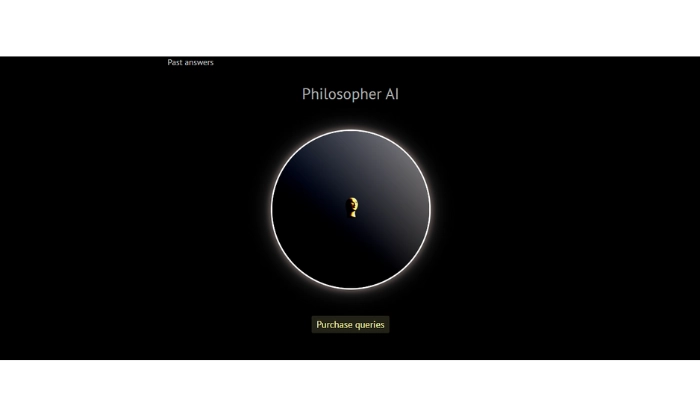
With Philosopher AI, an AI Dungeon alternative, you can blend your creativity with philosophical exploration. This platform is designed to engage you in profound conversations and thought-provoking dialogues, making it an ideal choice for those seeking a narrative experience that has philosophical interpretations.
This tool engages you in discussions about the very nature of storytelling, the essence of characters, and the purpose of a plot. Philosopher AI offers exactly that, providing a space for philosophical contemplation that can enrich and expand your storytelling horizons.
This unique approach challenges users to think critically and ponder the deeper aspects of their narratives. Its focus on stimulating intellect makes it a remarkable choice for those who seek a narrative adventure intertwined with philosophical inquiries.
Cataclysm: Dark Days Ahead
DISTINCTIVE FEATURES
– Survival Mechanics – Cataclysm:
Dark Days Ahead integrates survival mechanics into the gameplay, requiring you to manage resources, make strategic decisions, and adapt to a harsh post-apocalyptic world.
– Crafting and Building:
You can engage in crafting and building within the game, allowing for creativity in designing shelters and crafting essential items for survival.
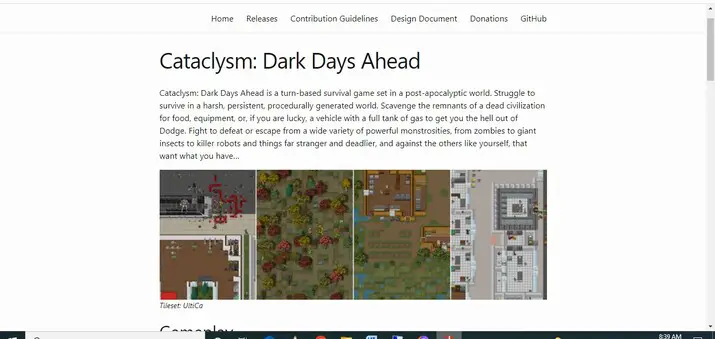
In the landscape of AI Dungeon alternatives, Cataclysm: Dark Days Ahead (an open-source roguelike game) presents a post-apocalyptic world teeming with challenges and opportunities for creative narratives.
It transports you to a world ravaged by cataclysmic events, leaving behind a grim and perilous reality. The game allows you to navigate this hostile landscape, facing challenges like zombies, mutated creatures, scarcity of resources, and environmental hazards.
Your decisions in this world can lead to varied outcomes, shaping your narrative and your character’s fate.
It creates a world where survival is a constant struggle, and every choice you make has dire consequences. Cataclysm: Dark Days Ahead offers precisely that, with depth and complexity that invites you to craft your stories within this post-apocalyptic canvas.
InferKit
DISTINCTIVE FEATURES
– Dark and Atmospheric Text Generation:
InferKit excels at generating dark and atmospheric text, immersing readers in intense and eerie storytelling experiences perfect for horror or suspense genres.
– Customizable Atmosphere:
You can tailor the generated text to be more intense, eerie, or suspenseful, allowing for a personalized level of darkness in the narrative.
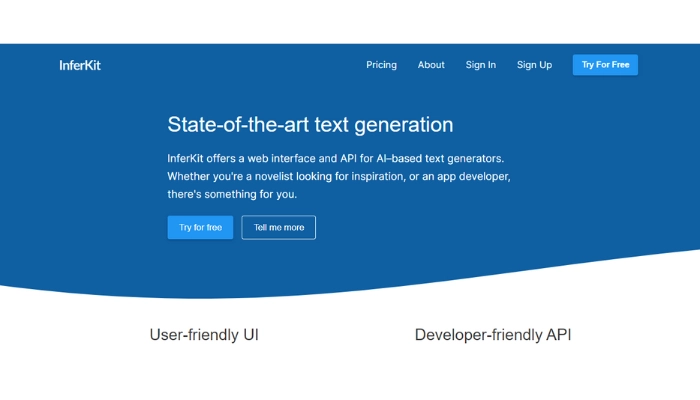
InferKit, an AI Dungeon alternatives, stands out as a platform that embraces dark and enigmatic aspects of storytelling. This AI tool is designed to assist in creating narratives that are intense, mysterious, and engaging.
It specializes in generating narratives with a darker tone, making it an excellent choice for writers and storytellers aiming to explore themes of suspense, horror, or intrigue.
InferKit aspires to be just that, offering a canvas for writers to weave stories that captivate and haunt the imagination. The platform’s focus on the darker side of storytelling makes it a valuable asset for authors seeking to embrace the macabre.
If you’re interested in exploring also the freely available alternatives of ChatGPT, I’ve composed a list of such options for you.
Final Thoughts
AI Dungeon offers a different approach to storytelling – one where you guide the narrative instead of following it. The mix of real-time AI responses, flexible gameplay, and open-ended creativity makes it a strong option for anyone who enjoys experimenting with stories, roleplay, or world-building.
At the same time, the experience depends on how you use it. Clear inputs, smart use of memory, and active guidance make a noticeable difference in the quality of what you get.
With the features, prompts, and techniques covered here, you’ve a practical foundation to get better results and avoid common frustrations. And while AI Dungeon stands out for its flexibility, exploring AI Dungeon alternatives can help you find tools that match your style, whether you prefer more structure, better consistency, or different types of interaction.
Together, these tools show how quickly AI storytelling is evolving, and how much control users now have over the stories they create.

Albert Haley
Albert Haley is the author behind ChatGPT 4 Online, where he writes about artificial intelligence, AI tools, and the latest developments in the field. With a strong interest in making AI easier to understand and use, he focuses on explaining complex concepts in clear, practical language. His goal is to help readers understand new technologies, discover helpful tools, and keep up with developments that matter. Author Bio